NEPRA New Net Metering Policy 2026: Complete Guide for Solar Users
If you are using solar panels at home, planning to install a system or already on net metering, 2026 has brought a very big change for you. On 9 February 2026, NEPRA replaced the old Net Metering system with a new Net Billing policy.
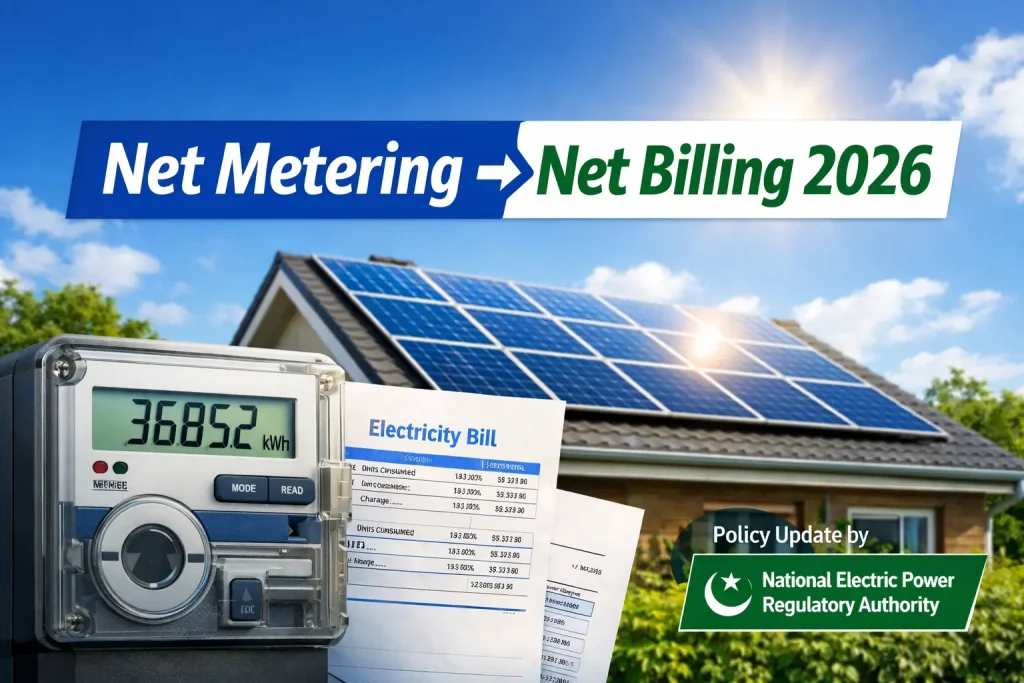
This is not a small update it completely changes how your solar electricity is calculated how much you are paid for exported units and how your bill is prepared.
To understand these changes clearly, you should regularly check your electricity bill and unit details. You can easily do this using an online bill checker like MEPCO Bill Check.
First, What Was the Old Net Metering System?
Under the 2015 net metering rules:
- If you sent 1 unit to the grid, you got 1 unit back in your bill.
- Export and import were adjusted unit-to-unit (1:1).
- The buyback/export rate was around Rs 25.9 per unit.
- Agreements were made for 7 years.
- Many users were able to reduce their bill close to zero and recover solar cost quickly.
This is why solar became very popular in Pakistan.
What Has Changed in New Net Metering Policy
NEPRA has now ended the 1:1 adjustment.
The new system is called Net Billing.
Now:
- Units you export to the grid are sold at a low rate.
- Units you import from the grid are bought at normal high tariff.
- Both are calculated separately every billing cycle.
This is the biggest change.
Net Metering vs Net Billing
Feature | Old Net Metering | New Net Billing 2026 |
Unit adjustment | 1 unit = 1 unit | No adjustment |
Export rate | ~ Rs 25.9 / unit | Around Rs 8–11 / unit (national average energy price) |
Import rate | Normal tariff | Normal tariff (Rs 40–50+) |
Contract period | 7 years | 5 years |
Billing method | Unit balancing | Separate buy & sell calculation |
What This Means in Real Life
Example:
- You sell solar units at ~Rs 11.
- You buy electricity at Rs 45.
So exporting a lot of extra units is no longer profitable like before.
Solar still saves money but only if you use most of the electricity during the daytime yourself.
This is why the focus has now shifted to self-consumption not exporting.
Important Technical Rules Introduced in 2026
NEPRA has also added some system limits and conditions:
- Maximum system size allowed: 1 Megawatt
- Your solar capacity cannot exceed your sanctioned load
- If transformer generation reaches 80%, new connection may be refused
- Systems above 250 kW require a Load Flow Study
- Interconnection cost will be paid by the consumer
- Rs 1,000 per kW non-refundable concurrence fee
- Bi-directional (two-way) metering is mandatory
These rules are to protect grid stability.
What About Existing Net Metering Users?
This is very important.
If you already have net metering:
✅ You will continue under your existing agreement
✅ Old rates and rules apply until your contract expires
After expiry, renewal will be under the new Net Billing policy.
New applicants will only get net billing.
Will Solar Still Be Worth It?
Yes,but the strategy must change.
Earlier, people installed large systems to export extra units and earn benefit.
Now, smart users will:
- Size the system according to daytime usage
- Use appliances during solar hours
- Reduce dependence on grid instead of selling to grid
Solar is still helpful just in a different way.
Things to Check Before Installing Solar Now
Before you invest think about:
- How many units you use in daytime
- Your sanctioned load
- Transformer capacity in your area
- New 5-year agreement limit
- Interconnection and concurrence costs
- Updated financial calculation based on Rs 8–11 export rate
This planning will save you from wrong expectations.
Frequently Asked Questions
Final Thoughts
The 2026 policy is a major shift in Pakistan’s solar landscape.
- Export benefit is reduced
- Rules are stricter
- Contracts are shorter
- Planning is more important than ever
But solar is not finished. It is simply moving from an “export earning model” to a “self-use saving model”.
If you plan wisely and size your system according to your real usage, solar will still give you solid savings for many years.